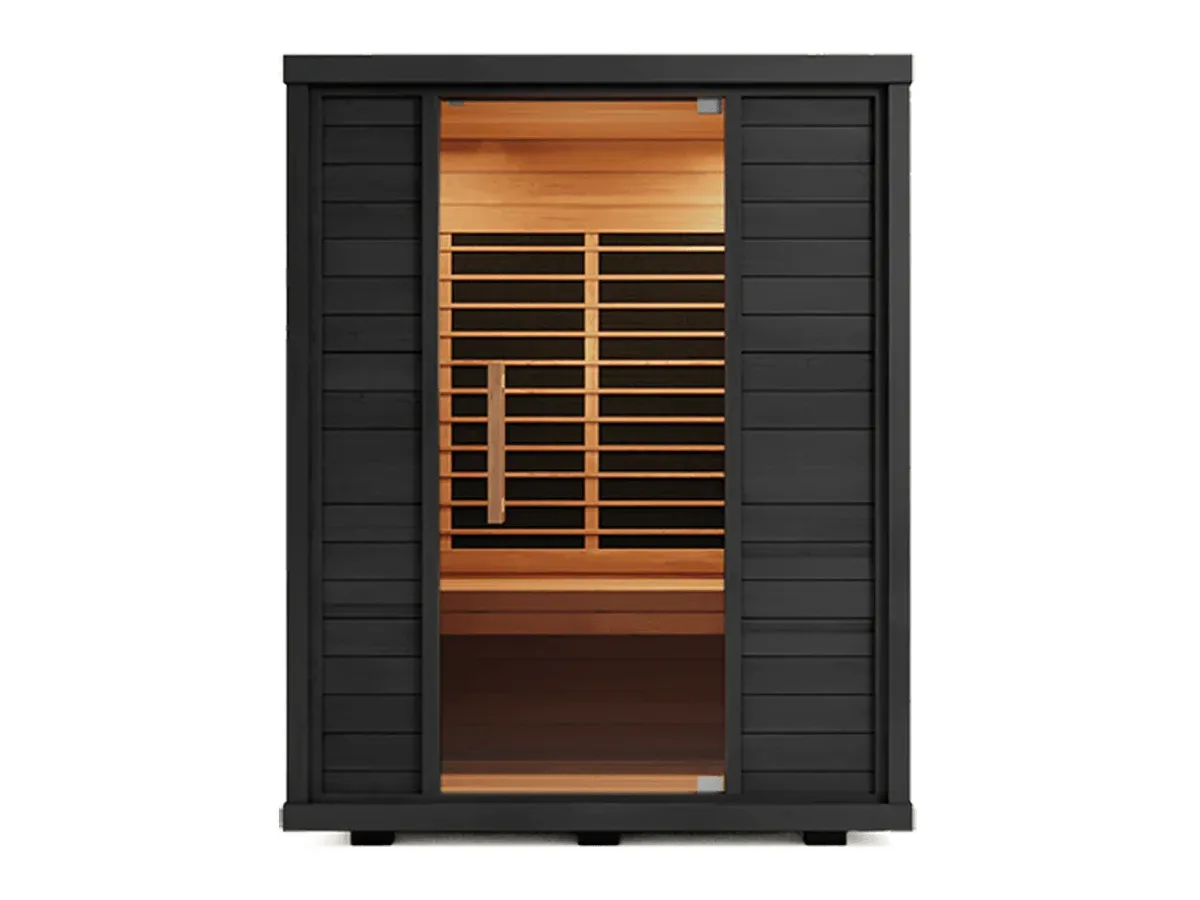
Our pick
Sun Home Equinox 2-Person
165°F full-spectrum heat on a 120V circuit, with a 7-year warranty.
About $6,100–$6,800
Check priceBest infrared saunas of 2026: seven cabins compared on heaters, real-world temperatures, EMF, power needs and owner reports, from $2,000 budget models to red light and outdoor saunas.
The best infrared sauna for most homes is the Sun Home Equinox: full-spectrum heat that reaches 165°F on an ordinary 120V circuit, for about $6,100–$6,800.
An infrared sauna is a cabin that warms your body directly with infrared heater panels, while the air stays at roughly 120–165°F, cooler than a traditional sauna. As of October 2026, we compared seven of the most-searched infrared models on heaters, real-world temperatures reported by owners, EMF, power needs and warranty. The gap between advertised and real temperatures is the biggest thing most reviews miss, so we report what owners actually measure.
Our pick
165°F full-spectrum heat on a 120V circuit, with a 7-year warranty.
About $6,100–$6,800
Check price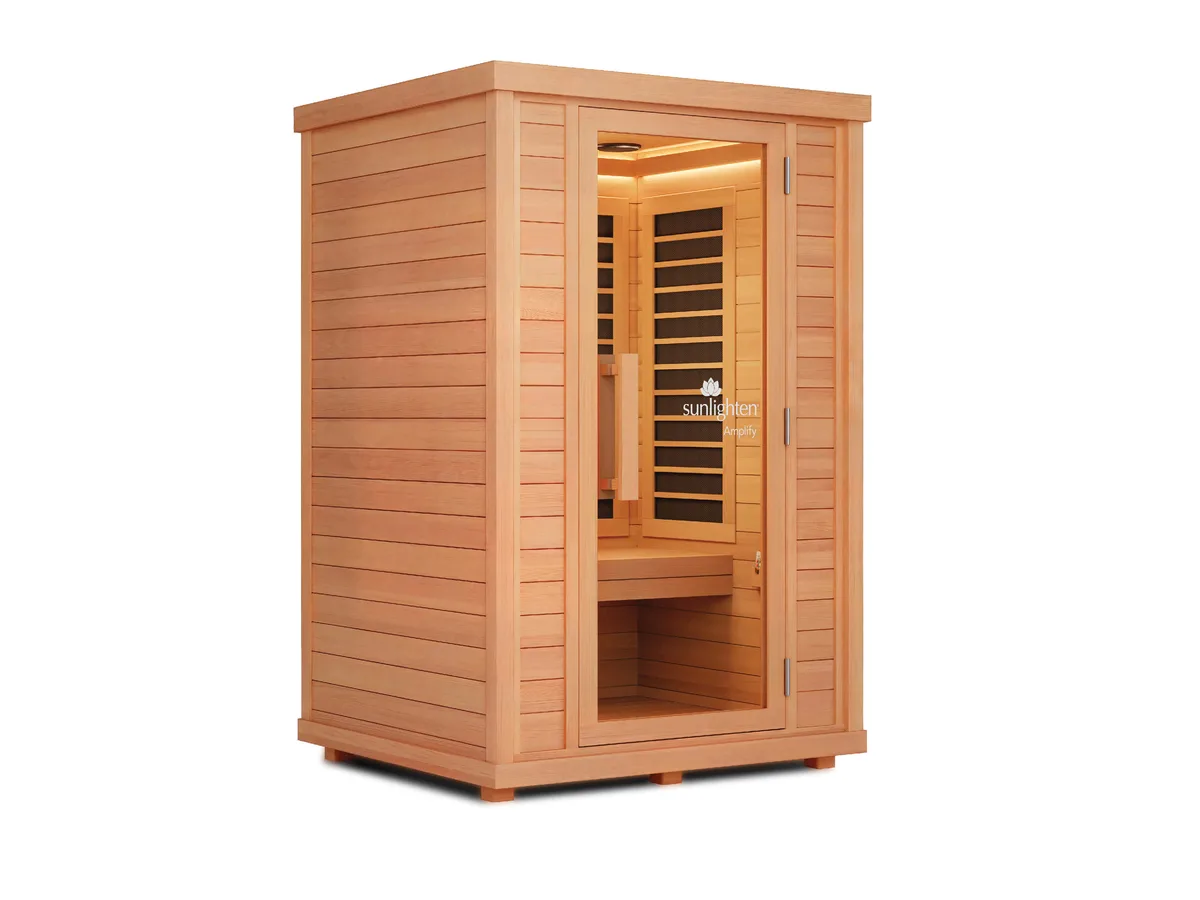
Hottest
Owners report a steady 165–168°F, the most heat we found indoors.
About $5,800–$6,000
Check price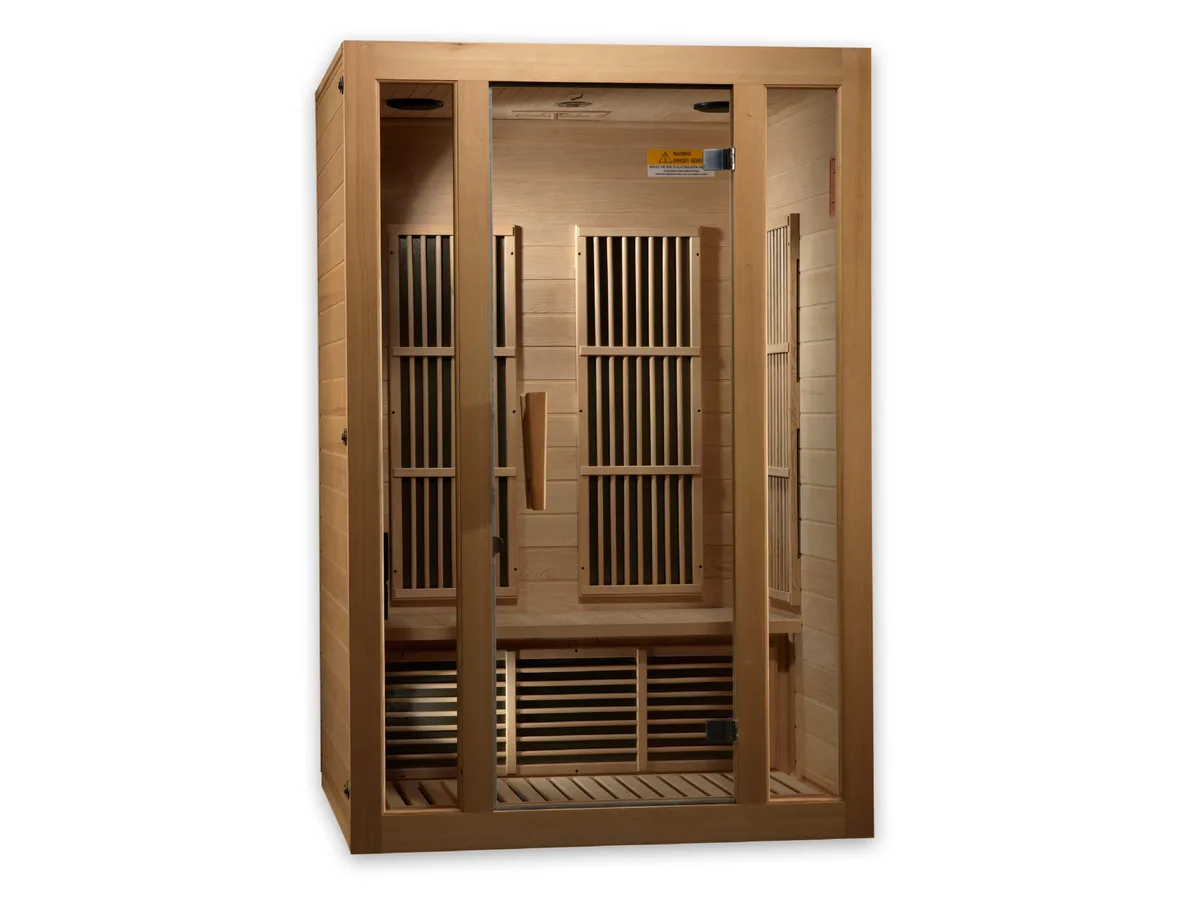
Budget pick
A genuinely 2-person hemlock cabin for about $2,300.
About $2,300
Check price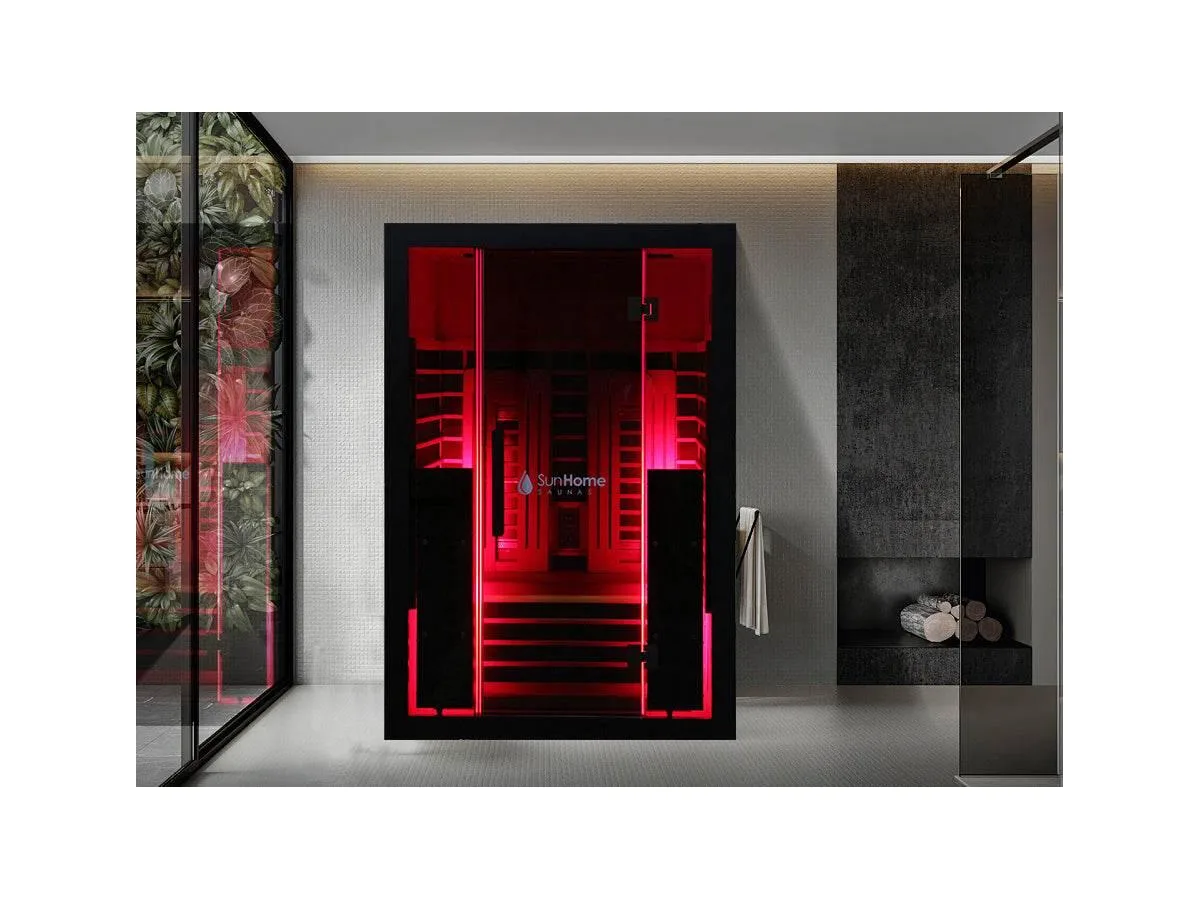
Red light
Built-in 650/850nm red light towers in a Japanese cedar cabin.
About $10,000
Check price| Pick | Sauna | Heat | Capacity | Power | Warranty | Price |
|---|---|---|---|---|---|---|
| Best overall | Sun Home Equinox 2-Person Check price | Full-spectrum infrared | 2 people | 120V / 20A | 7 years | About $6,100–$6,800 |
| Hottest | Sunlighten Amplify II Check price | Full-spectrum infrared | 2 people | 120V | 7 years | About $5,800–$6,000 |
| Budget 2-person | Maxxus Seattle 2-Person Check price | Far infrared | 2 people | 120V | 5 years | About $2,300 |
| Budget 1-person | Dynamic Saunas Barcelona Check price | Far infrared | 1 person | 120V / 15A | 5 years | About $1,900–$2,300 |
| Red light | Sun Home Eclipse 2-Person Check price | Full-spectrum + red light | 2 people | 120V | Limited lifetime | About $10,000 |
| Outdoor | Sun Home Luminar Check price | Full-spectrum infrared | 2 people | 240V / 20A | Limited lifetime | About $11,000–$11,600 |
| Portable | Sunlighten Solo System Check price | Far infrared (lie-down) | 1 person | 120V outlet | 7 years (heaters) | About $2,100–$3,000 |
Prices checked October 2026 and change often. Tap a sauna to jump to its review.
Best for the most heat and features for the money on a 120v circuit
A full-spectrum cabin that reaches 165°F on a household 120V circuit, with chromotherapy and Bluetooth audio, for roughly $1,000 less than Clearlight.
The Sun Home Equinox balances heat, price and installation better than anything else we compared. It reaches 165°F with full-spectrum heaters but still runs on a 120V/20A GFCI circuit, so most homes don’t need a 240V run. It shares its platform with the Sunlighten Amplify II at a published price you can order online. Sun Home is a young brand, so long-term owner reports are still limited.
Independent owner reports are still thin, because the brand only launched in 2021, and some online praise reads as promotional. Real owners we found praise fast heat-up and solid temperatures. An Eclipse buyer from the same brand complained of missing steps in the instructions and a crushed LED connector. Sun Home itself acknowledges past delivery delays.
Skip it if: You want a decade-long track record before spending $6,000 or more.
Best for the hottest indoor infrared session
The most-searched sauna brand in the US, and the Amplify II runs hotter than its rivals. Owners report a steady 165–168°F, thanks to angled front heaters and less glass to leak heat.
Owners report the Amplify II holds 165–168°F even with the door opened mid-session, thanks to angled front heaters, halogen boosters and less glass than rivals. Sunlighten is America’s most-searched sauna brand. Its service record is mixed, so get the warranty terms in writing before you buy.
Owners who have one that works love the heat. An Amplify II owner reports a consistent 165–168°F with the door opened mid-session. The negatives are about service rather than the cabin: an owner with a defective unit was asked to rewire panels themselves, mPulse touchscreens freezing is a known complaint, and many buyers describe aggressive sales follow-up. Sunlighten holds 4.6/5 from about 4,000 Trustpilot reviews.
Skip it if: Smooth after-sales service matters more to you than peak temperature.
Best for the cheapest real 2-person cabin
A Canadian hemlock 2-person cabin with six carbon heaters, chromotherapy and Bluetooth for about $2,300. It’s a genuinely two-person budget cabin.
Most budget “2-person” cabins really fit one adult. The Maxxus Seattle is roomier, with six carbon panels including under the bench and in the floor, for about $2,300. Owners report about 20 minutes to reach 140°F, and Golden Designs backs it with a 5-year warranty.
A three-year owner of a 2-person Maxxus says it still works well. It takes about 20 minutes to reach 140°F, and the control panel got glitchy after year two, though a power cycle fixes it. A Maxxus Alpine owner who caught a big sale is happy and has no complaints. Owners point to Golden Designs’ customer support and the 5-year warranty as reasons to choose it over cheaper no-name cabins.
Skip it if: Low EMF is a priority. Premium brands publish far lower readings.
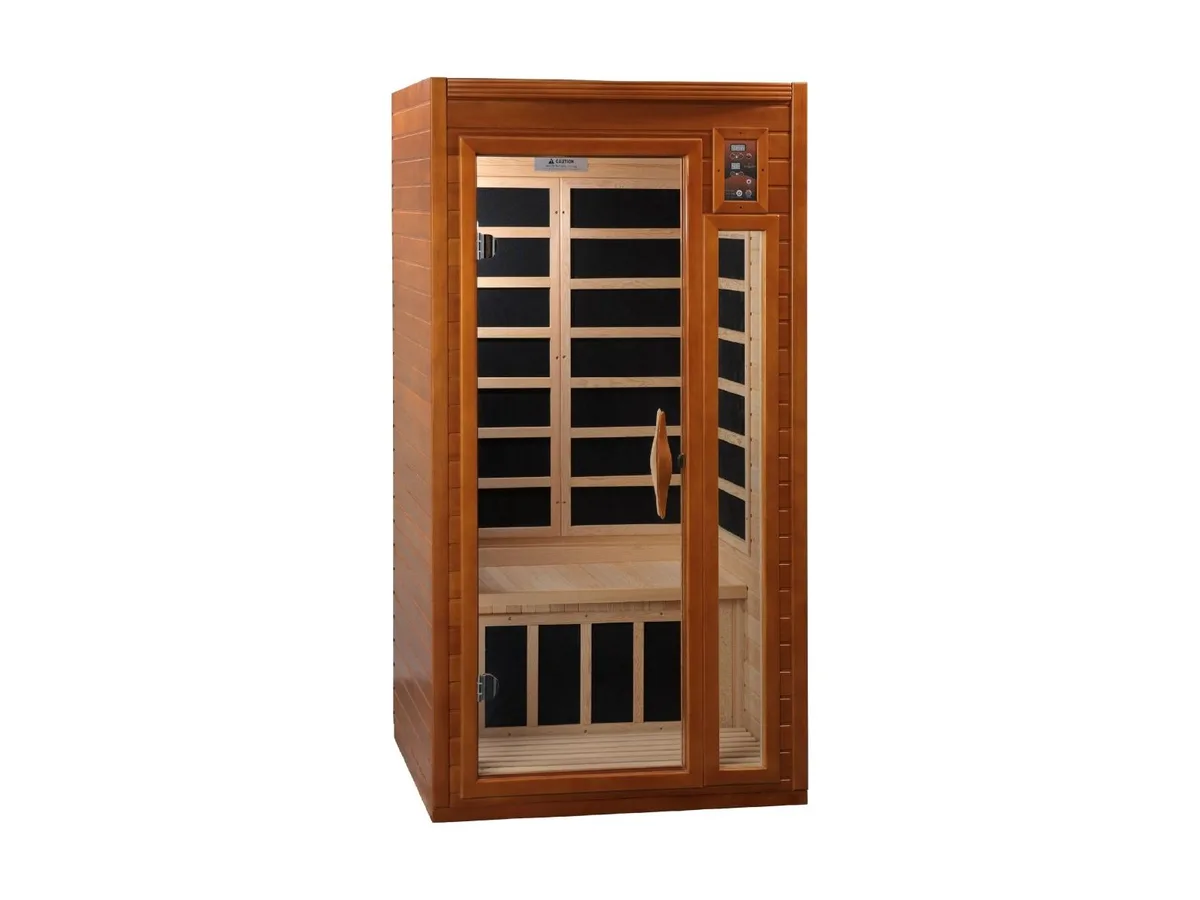
Best for the cheapest real cabin worth buying
A compact Canadian hemlock cabin that plugs into a regular outlet for about a third of the price of premium brands. Owners say it really suits one person.
The Barcelona is the smallest, cheapest wooden cabin we’d recommend, and it fits in a closet or bathroom corner. It’s really a one-person sauna, and it needs a long preheat, but it plugs into a standard 120V/15A outlet.
Owners agree it does the job for the price, with two caveats. It takes 30–40 minutes to get properly warm, and the "1–2 person" label is generous: two adults sit uncomfortably close. One owner reports almost two years of use at two to three sessions a week. Another had an early failure where the replacement part also failed.
Skip it if: You plan to share it, or you want to step in hot within 15 minutes.
Best for built-in red light therapy
A Japanese cedar full-spectrum cabin with two red light towers built in. The red light adds heat as well as light, so it reaches 165°F on a 120V circuit.
The Eclipse builds two red light towers (650nm and 850nm) into a Japanese cedar full-spectrum cabin. Owners say the red light adds noticeable heat, helping it reach 165°F on 120V. The cabin gets strong praise, but its app and connectivity draw complaints, and at about $10,000 it’s the priciest indoor pick.
Owners love the cabin itself. Two report reaching 165°F in about 30 minutes, and one calls the red light "intense". The weak spot is the technology: several owners struggled with Wi-Fi, Bluetooth and the app, and one described tech support for it as poor. A two-month owner says theirs takes over an hour and tops out in the 150s. Sun Home replied publicly to help troubleshoot.
Skip it if: You don’t care about red light. The Equinox costs about $4,000 less.
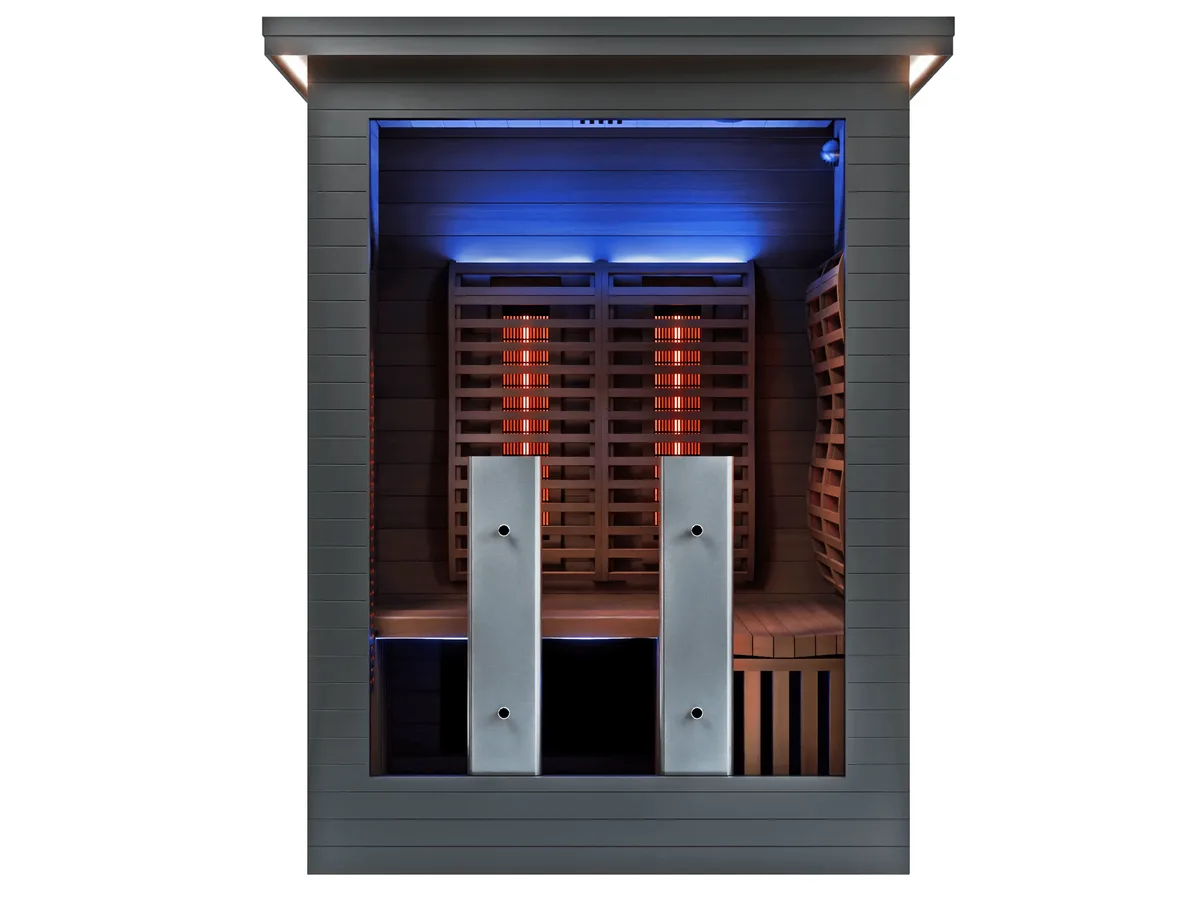
Best for an infrared sauna that lives outdoors with no cover
An aluminium-clad infrared cabin built to sit outside year-round without a roof or cover. It heats in about 15 minutes and reaches 170°F.
The Luminar is built to live outdoors with no cover, thanks to an aluminium exterior. It reaches 170°F and heats in about 15 minutes, according to owners. It needs 240V. See more outdoor options in our best outdoor saunas guide.
The most detailed independent review we found comes from a Luminar 5-person owner in coastal California. It is ready in about 15 minutes, holds heat well (still 20°F above ambient a day later) and is "perfect for two adults". The catch was total cost, which came in far above budget once the pad and electrical work were added. Another owner reports two years outdoors with no issues.
Skip it if: You can put a sauna indoors or under cover. Cheaper indoor cabins do the same job.
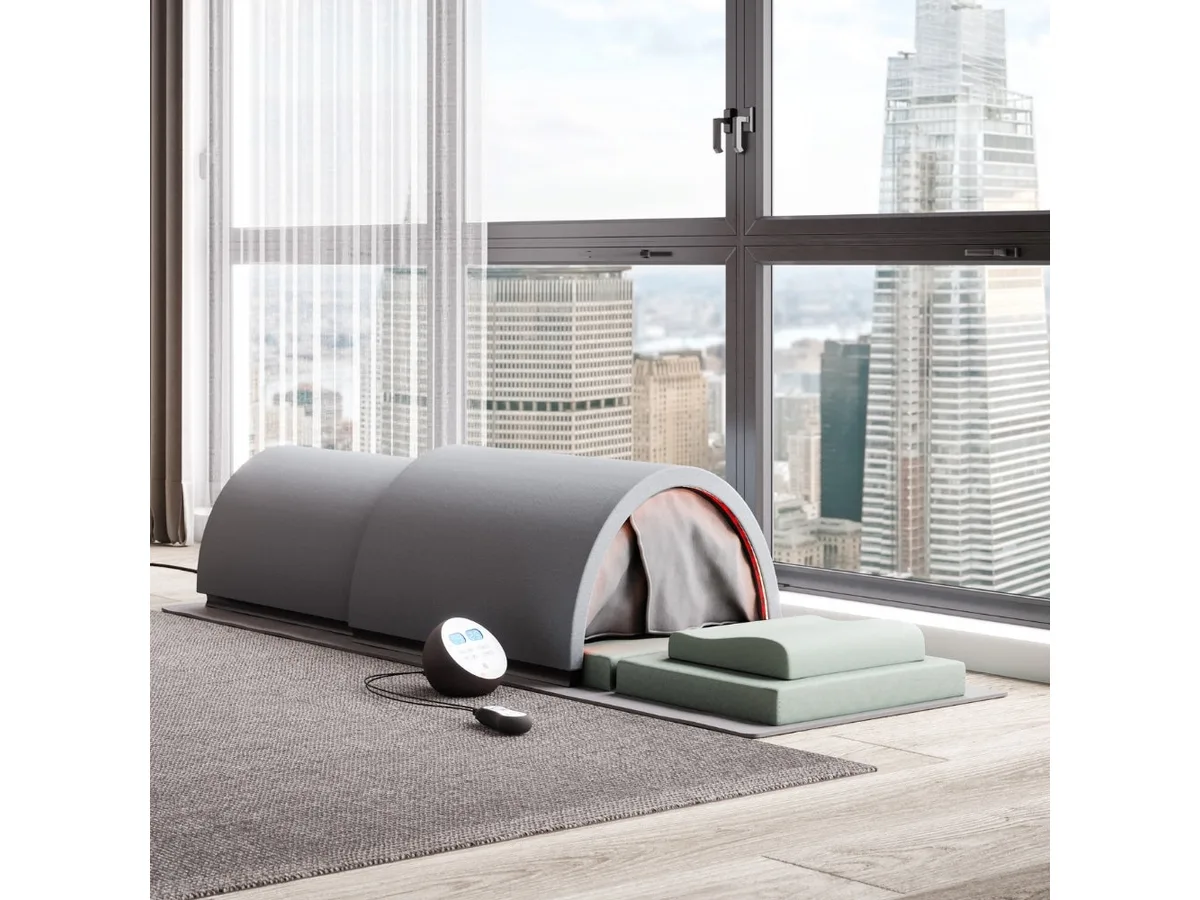
Best for infrared you can lie down in, then fold away
A lie-down infrared dome and heated pad that plug into any outlet and fold into a closet, from the most-searched sauna brand in the US.
If you don’t have room for a cabin, the Solo puts a heated pad under an infrared dome so you can lie down, then fold it into a closet. It’s gentler and slower than a cabin, but it carries a 7-year heater warranty. See our best portable saunas guide for more.
A several-year Solo owner says it needs 30–45 minutes of preheat to feel the full effect, and felt the heaters grew less effective over time. Another owner wanted more intensity. Owners like the lie-down position and how close the heaters sit to the body. Sunlighten’s wider service record is mixed, so keep your paperwork.
Skip it if: You want true sauna temperatures. A cabin or a hot-air pod gets far hotter.
Every spec here comes from the manufacturer or an authorized dealer, and every temperature in the “What owners say” boxes comes from real owners. Infrared saunas often run cooler than advertised, so we lead with what owners measure. We haven’t tested these cabins hands-on. We earn a commission on links, and that never changes what we report about weaknesses. How we make money.
Far-infrared saunas (Maxxus, Dynamic) use carbon panels that emit mostly far infrared, which does the bulk of the work warming you. Full-spectrum saunas (Sun Home, Sunlighten) add near- and mid-infrared heaters. They tend to run hotter and many buyers prefer the feel, but research hasn’t shown clear extra health benefits. Pay for full-spectrum because you want the heat and experience. See what the research says in our infrared sauna benefits guide.
Advertised maximums are best-case figures. Owners report:
| Sauna | Advertised | What owners report |
|---|---|---|
| Sunlighten Amplify II | Up to 170°F | Steady 165–168°F |
| Sun Home Eclipse | 165°F | 165°F in ~30 min (one owner: 150s after an hour) |
| Maxxus Seattle | n/a | About 140°F in 20 minutes |
| Dynamic Barcelona | 140°F | 30–40 minutes to a good temperature |
| Sunlighten Solo | 150°F | 30–45 minute preheat |
Infrared heats your body directly, so air temperature matters less than in a traditional sauna. Still, if you love intense heat, choose the hotter models.
If electromagnetic fields concern you, compare published readings. Sun Home lists 0.5 mG for the Eclipse, Sunlighten claims under 1 mG, and the budget Maxxus Seattle lists 5–10 mG measured 2–3 inches from the panels. Treat “low EMF” without a number as marketing.
| Sauna | Power |
|---|---|
| Dynamic Barcelona | 120V / 15A |
| Maxxus Seattle | 120V household circuit |
| Sun Home Equinox | 120V / 20A, GFCI |
| Sun Home Eclipse | 120V / 2,820W, GFCI |
| Sunlighten Amplify II | 120V |
| Sun Home Luminar | 240V / 20A |
| Sunlighten Solo | 120V outlet |
Canadian hemlock (Maxxus, Dynamic) is the budget standard and nearly scent-free. Eucalyptus (Sun Home Equinox, Sunlighten) and Japanese cedar (Sun Home Eclipse) are premium options. Many owners run a few empty heat cycles first to burn off any new-cabin smell.
Apps, Wi-Fi and Bluetooth are convenient, but they’re the most common complaint across infrared brands: Sun Home Eclipse owners report connectivity issues, Sunlighten mPulse owners report screen freezes, and Clearlight owners report remote start failing after a few years. Treat smart features as a bonus.
A typical 2-person infrared sauna draws about 2–3kW, so an hour including warm-up costs roughly 35–50 cents at average US electricity rates. That’s about $6–$9 a month at four sessions a week, less than half the cost of a traditional sauna with a 6kW heater. Compare the two in our infrared vs traditional guide.
For most homes, the Sun Home Equinox is the best infrared sauna. It reaches 165°F with full-spectrum heaters on a standard 120V/20A circuit and costs about $6,100–$6,800. For the most heat, owners report the Sunlighten Amplify II holds a steady 165–168°F. On a budget, the Dynamic Barcelona and Maxxus Seattle cost about $2,000–$2,300.
Full-spectrum saunas add near- and mid-infrared heaters to standard far-infrared panels. Far infrared does most of the work of warming your body. There is little research showing full-spectrum delivers extra health benefits, so buy it because you like the feel and the extra heat, not for marketing claims.
Most infrared saunas reach 120–150°F in real use, and premium models advertise 165–170°F. Owners report the Sunlighten Amplify II at 165–168°F and the Sun Home Eclipse at 165°F in about 30 minutes, while budget cabins like the Maxxus Seattle reach about 140°F in 20 minutes.
Most 1–2 person infrared saunas run on a standard 120V outlet, ideally on a dedicated 15A or 20A circuit (Sun Home requires GFCI protection). Larger and outdoor models, like the Sun Home Luminar, need 240V. Always check the specific model's requirements.
Infrared heaters produce electromagnetic fields, like most electrical appliances. Low-EMF saunas use heater designs that reduce the fields measured inside the cabin. Premium brands publish readings below 1–3 mG, while budget cabins like the Maxxus Seattle list 5–10 mG near the panels. If it matters to you, compare published test figures rather than labels.
Most people settle at 20–40 minutes, starting with 10–15 minutes at first. Infrared runs cooler than a traditional sauna, so sessions are longer. Drink water before and after, and stop if you feel dizzy or unwell.